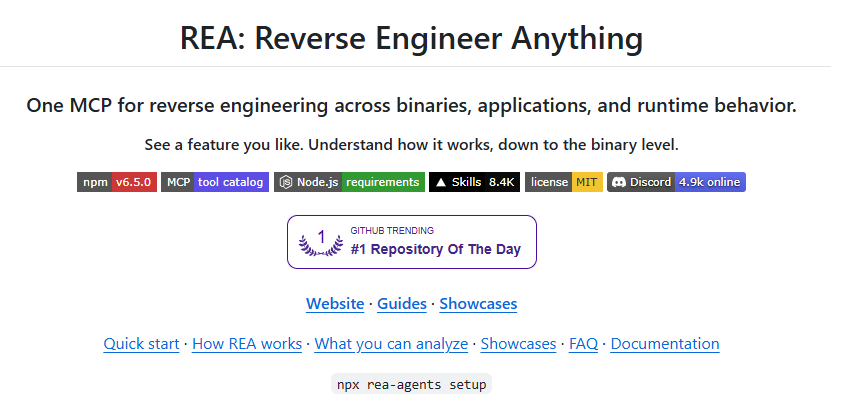
In late October 2026, a GitHub repository called REA (Reverse Engineer Anything) crossed 18,000 stars in under two weeks, riding a wave of breathless social media posts claiming it could analyze compiled binaries, firmware, and obfuscated code using AI — and explain everything in plain English. The hype cycle was immediate. The truth, as usual, is considerably more nuanced.
What REA Claims to Do
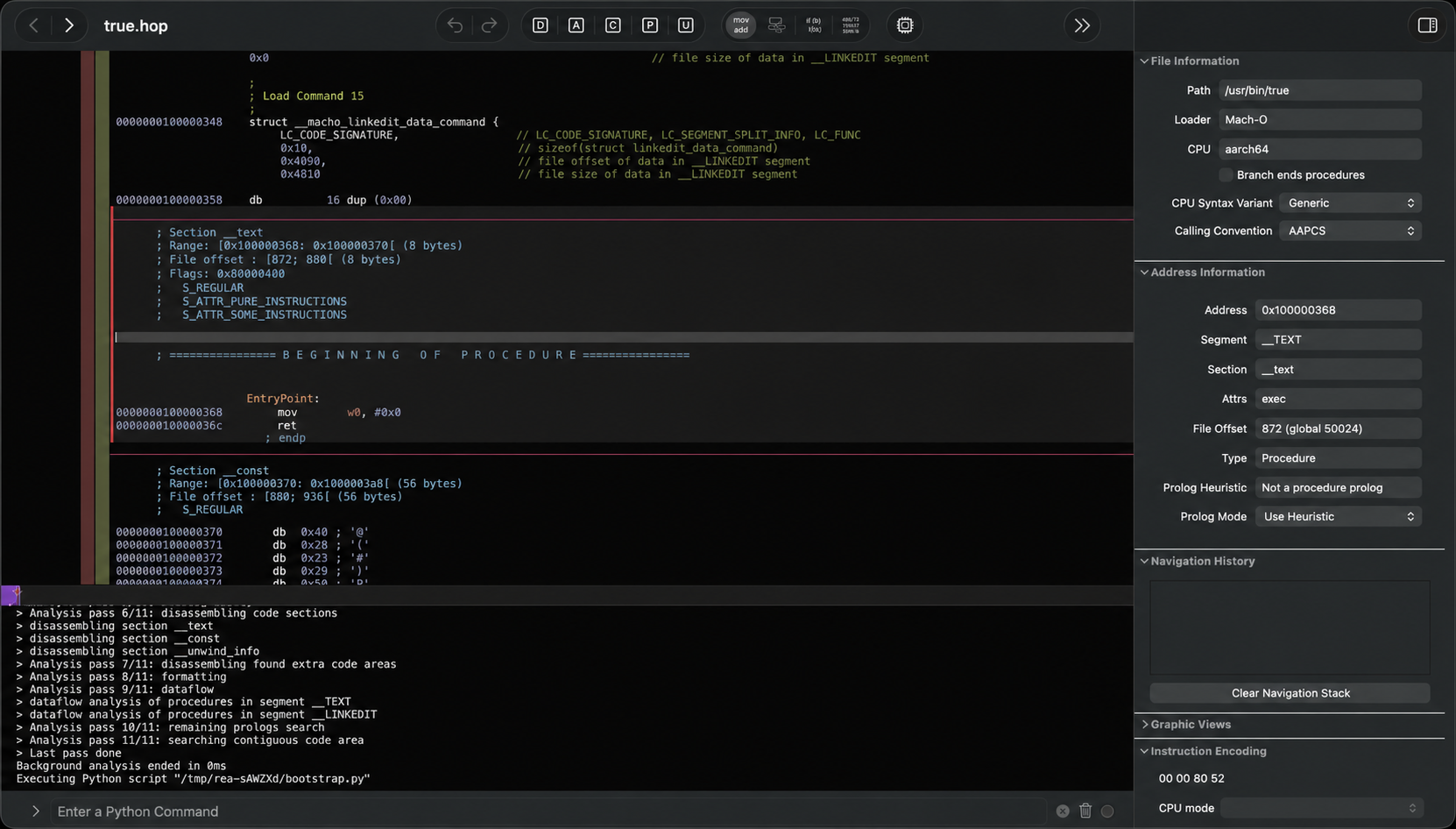
REA, hosted at github.com/morluto/rea, positions itself as an AI-powered wrapper around established reverse engineering tooling. The core concept is straightforward: take the output of classic tools like objdump, radare2, or pycdc, structure it into a prompt, and feed it to a large language model (LLM) — defaulting to an OpenAI-compatible API but supporting local models via Ollama — which then returns a structured, human-readable analysis.
Instead of reading pages of raw x86-64 assembly, you get a natural-language summary of what a function does, what data structures it manipulates, and what potential vulnerabilities it might contain. On paper, this is a sensible application of LLMs to a genuinely difficult domain. The question is whether the execution matches the pitch.
What Actually Works
The security research community spent the weeks following the launch running REA against a range of real-world targets. The verified wins are real, if more modest than the marketing suggests:
- Python bytecode analysis (.pyc files): REA's combination of pycdc and LLM summarization consistently produced useful logical-flow explanations for moderately sized, non-obfuscated Python files. Multiple researchers on Reddit and Hacker News called results here "genuinely helpful."
- Small ELF binaries: For Linux ELF files under roughly 500 KB, function identification and annotation quality was described by at least one independent security researcher as "surprisingly coherent" when benchmarked against manual annotations.
- Legacy code documentation: Engineers inheriting undocumented codebases reported that REA could generate a workable first-draft documentation layer, cutting initial analysis time significantly — though every output still required careful human review.
- Backend flexibility: The modular architecture allows organizations with strict data-privacy requirements to swap in local models like Llama 3 or Mistral, which is a meaningful design choice for enterprise environments.
Where the Claims Fall Apart
The repository's README made several claims that independent testing has not been able to reproduce at the advertised level of reliability:
- IoT firmware analysis: REA struggles significantly with exotic architectures — bare-metal ARM Cortex-M without symbols, big-endian MIPS — and with binaries that include anti-analysis protections. When the disassembled input is ambiguous, the LLM frequently hallucinates data structures and function purposes that do not exist in the original code.
- Real-time network protocol analysis: The feature exists in the codebase but is flagged as experimental. In practical tests with PCAP captures containing proprietary protocols, results ranged from generic to actively misleading.
- Scalability: Binaries larger than roughly 2 MB exceed the usable context window of most available LLMs. REA chunks the analysis, but cross-chunk coherence degrades noticeably, producing summaries that contradict each other or miss critical cross-function dependencies.
- The star count itself: Several GitHub analysts have flagged anomalous growth patterns in the project's first 48 hours that are consistent with coordinated starring activity. This does not invalidate the tool, but it should temper the enthusiasm the numbers appear to justify.
The Bottom Line
REA fills a real gap. Reverse engineering has historically required deep specialist knowledge, and anything that lowers the barrier for non-expert engineers dealing with legacy systems or security audits has genuine value. A junior analyst who can use REA to get a rough map of a simple binary before diving deeper is a more productive analyst. That matters.
What REA is not: a replacement for Ghidra, a competitor to IDA Pro in depth of analysis, or the paradigm-shifting tool that the viral posts described. Senior security researchers will, at best, use it as a first-pass assistant that generates annotated scaffolding they then verify and refine by hand.
The pattern is familiar in the 2026 AI tooling landscape: a genuinely interesting project that mixes real capabilities with inflated claims to maximize launch-day visibility. REA deserves attention, experimentation, and contributions from the community. It does not deserve blind faith. Evaluate it against your specific use case — and keep Ghidra open in the next tab.


