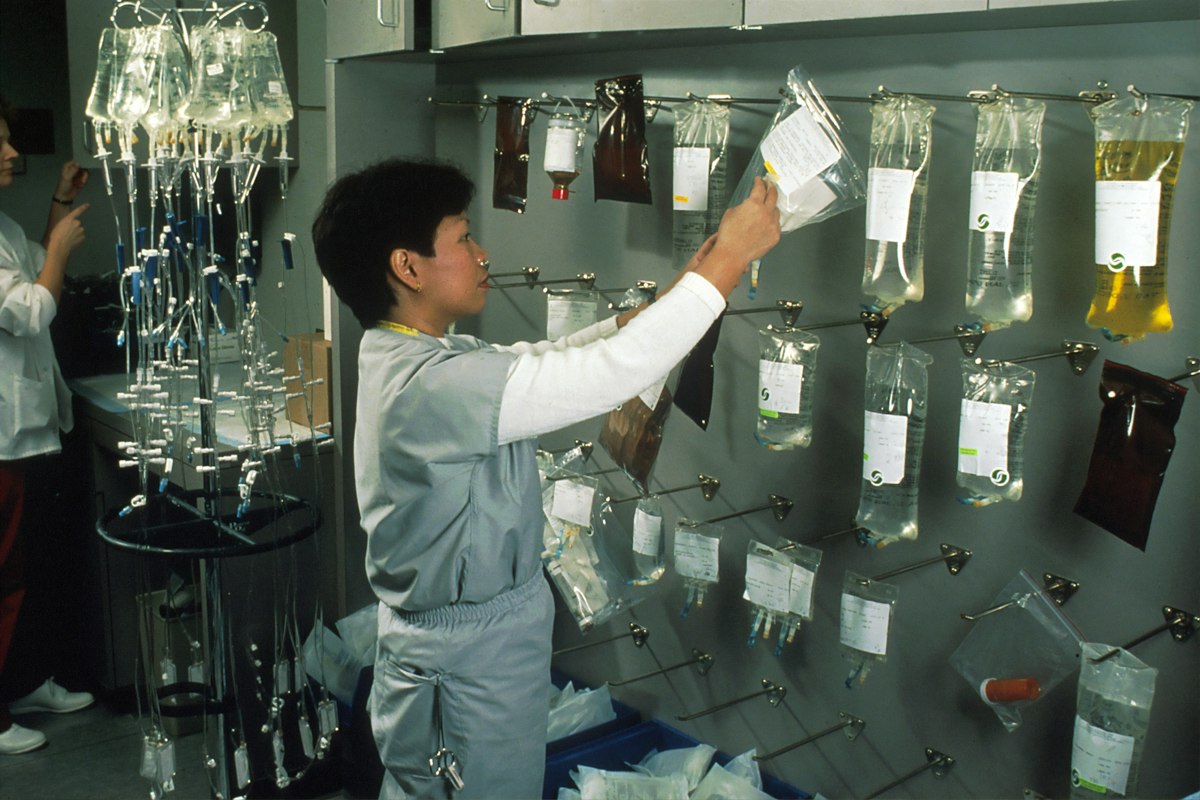
In pharmaceutical manufacturing, a cross-contamination error is not merely an operational inconvenience — it can cost lives. That is why line clearance — the process of verifying that a production line is completely free of residues, labels, or components from a previous batch before starting a new one — is among the most critical and tightly regulated procedures in the entire industry. Until recently, this process relied almost entirely on human visual inspection. In 2026, Edge AI is changing that reality in ways that are quiet but genuinely profound.
Why Line Clearance Is So High-Stakes
Good Manufacturing Practice (GMP) regulations require that every batch changeover in a pharmaceutical plant include a thorough environmental verification. Any stray tablet, label fragment, capsule piece, or trace powder from the previous product can contaminate the next batch — with consequences ranging from large-scale market recalls to direct patient harm.
Historically, this meant two trained operators visually inspecting every corner of the production line and signing off on a paper record. The problem is predictable: fatigue, distraction, and human variability mean that even experienced operators make mistakes. According to reporting in Photonics Spectra, line clearance failures are among the most frequent causes of quality deviations in pharmaceutical plants worldwide.
Edge AI: Putting Intelligence Where It Matters Most
The solution gaining serious traction in 2026 combines computer vision, deep learning models, and edge computing — meaning the processing happens on local hardware rather than in the cloud. That architectural choice is not trivial. In regulated production environments, cloud latency could slow operations, and external dependencies introduce technical and regulatory vulnerabilities that compliance teams simply cannot accept.
Edge AI line clearance systems work through high-resolution cameras — often equipped with structured lighting or hyperspectral imaging technology — installed at strategic points along the production line. A model trained on thousands of images of both clean and contaminated lines analyzes each captured frame in real time. If it detects an anomalous object, it immediately alerts the operator. If the line is clear, it generates a digital, time-stamped, fully auditable record that satisfies GMP documentation requirements.
Companies like Antares Vision, Cognex, and several European pharmatech startups already offer mature solutions in this space. Some integrate additional sensors: near-infrared (NIR) spectroscopy to detect chemical residues invisible to the naked eye, or differential pressure sensors to verify that containment barriers are properly sealed.
The Regulatory Hurdle: Convincing the FDA and EMA
Deploying these systems is considerably more complex than installing a camera and training a model. The U.S. Food and Drug Administration and the European Medicines Agency both require that any automated system used in GMP processes be formally validated against strict standards. The system must demonstrate that it detects contaminants below defined error-rate thresholds, and the entire data infrastructure must comply with regulations like 21 CFR Part 11 on electronic records and signatures.
This means manufacturers must exhaustively document the model's training process, the datasets used, lighting conditions, the specific contaminant types the system can detect, and the boundaries of what it cannot. It is a time-consuming and expensive validation path — but companies that have completed it report dramatic reductions in batch changeover times. In some documented cases, a process that previously took several hours now completes in under thirty minutes.
Beyond Line Clearance: The Broader AI Transformation in Pharma
Automated line clearance is only the most visible entry point. The same computer vision and Edge AI infrastructure is being adapted for container closure integrity inspection, dose verification on filling lines, and visible particle detection in injectable vials — one of the most demanding inspection tasks in the industry, currently performed by trained human inspectors staring at vials under controlled lighting for hours at a time.
The pharmaceutical sector, historically one of the most conservative industries when it comes to technology adoption, has been accelerating its digital transformation since the COVID-19 pandemic exposed the fragility of manual processes under extreme production pressure. Edge AI fits neatly into that shift because it delivers consistent, documentable performance without requiring a modernized IT backbone.
Perhaps most importantly, the edge architecture democratizes access. A manufacturing facility in a country with limited network infrastructure benefits from the same inspection precision as a state-of-the-art plant in Germany or Japan. In an industry where quality is genuinely non-negotiable, that kind of technological leveling has value that is difficult to overstate.